
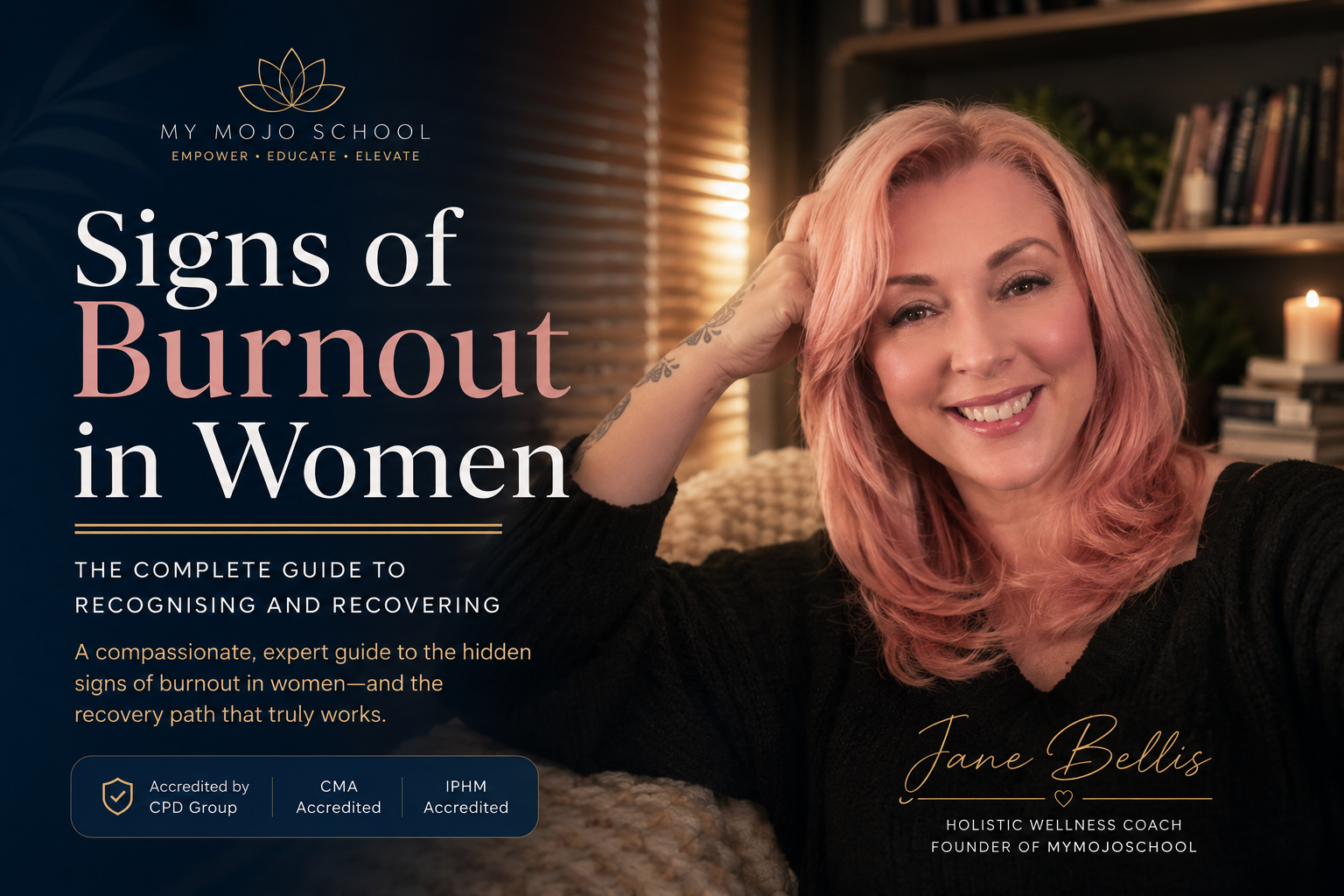
Signs of Burnout in Women: The Complete Guide to Recognising and Recovering
You are still showing up. Still answering the messages, managing the household, meeting the deadlines, and checking in on everyone else. From the outside, everything looks completely fine.
But internally, something has shifted. You feel emotionally exhausted in a way sleep does not fix. You go through the motions but feel strangely disconnected from your own life.
What Is Burnout — And Why Women Experience It Differently
Burnout is not simply being tired. It is a state of chronic emotional, mental, and physical exhaustion caused by prolonged stress without sufficient recovery.
Women frequently carry the emotional labour, invisible planning, caregiving pressure, household management, and relational responsibility that remain socially normalised but psychologically exhausting.
A Simple Self-Assessment: Are You Burnt Out?
- ☐ I feel tired even after sleeping
- ☐ Small tasks feel emotionally overwhelming
- ☐ I feel emotionally flat or detached
- ☐ I struggle to feel motivated
- ☐ I feel anxious without a clear reason
- ☐ My concentration feels worse than usual
- ☐ I feel guilty when resting
- ☐ I feel like I am constantly “pushing through”
- ☐ I no longer enjoy things I used to love
- ☐ I feel mentally overloaded most days
- 1–3 ticks: Early warning signs of burnout.
- 4–7 ticks: Moderate burnout requiring active support.
- 8–10 ticks: Severe emotional exhaustion needing structured recovery.
The Real Signs of Burnout in Women
1. High-Functioning Burnout: When You Look Fine But Feel Hollow
This is the sign that gets missed most often — and it disproportionately affects women.
High-functioning burnout is exactly what it sounds like: you are still functioning. You are still delivering. But the fuel running everything is not energy or motivation — it is adrenaline, obligation, and momentum. The machine is moving, but the driver is not really there.
Women with high-functioning burnout are often the last people anyone would suspect. They are the reliable ones. The ones who always come through. Which is precisely why they so rarely receive support until the breakdown is impossible to ignore.
Signs of high-functioning burnout include performing well at work while feeling completely empty afterward, dreading weekends because the structure disappears, feeling more anxious when you have nothing to do than when you are busy, and an inability to genuinely switch off even when given the opportunity.
2. Exhaustion That Sleep Does Not Fix
This is perhaps the most universal sign of burnout in women, and the most misunderstood.
Burnout fatigue is not like ordinary tiredness. Ordinary tiredness resolves with rest. Burnout fatigue is cumulative and systemic — it lives in the nervous system, the muscles, the mind. Women describe it as feeling “bone tired” regardless of how much they sleep, or waking up already exhausted before the day has even begun.
If you are sleeping but not recovering, that is a signal worth taking seriously.
3. Emotional Numbness
Many women in burnout describe a strange flatness — an inability to feel things fully in either direction. Things that would normally make them happy feel muted. Things that would normally upset them feel oddly distant. They describe going through their days feeling like they are watching their life from behind glass.
This emotional disconnection is the nervous system’s protective response to sustained overload. It is not depression, though it can look similar. It is the mind’s way of turning down the volume when the signal has been too loud for too long.
4. Anxiety Without a Clear Cause
Burnout and anxiety frequently travel together in women — and the anxiety that comes with burnout is particularly confusing because it often does not attach itself to anything specific. It is a background hum of unease, a low-level dread, a sense that something is wrong even when everything looks objectively fine.
This free-floating anxiety is often a sign that the nervous system is running on high alert as a default state — a physiological response to months or years of chronic stress that the body has begun to treat as normal.
5. Physical Symptoms That Have No Clear Medical Cause
Burnout lives in the body. Common physical signs in women include persistent headaches, tension in the jaw, neck and shoulders, digestive issues, skin flare-ups, recurring illnesses, heart palpitations, disrupted sleep patterns, and a generalised physical heaviness that makes even simple tasks feel effortful.
Many women visit their GP for these symptoms and receive a clean bill of physical health — and then continue pushing themselves because they assume everything must be fine. The body is often the earliest and most persistent messenger that something needs to change.
The Three Stages of Burnout
Stage One: Warning Signs
In this stage, the signs are subtle and easy to rationalise. You feel more tired than usual, slightly less motivated, a little more irritable. You tell yourself it is a busy period and it will pass.
What to do: Protect your sleep, reduce unnecessary commitments, begin noticing what drains you most, and start building in deliberate recovery time — not as a luxury, but as a non-negotiable.
Stage Two: Active Burnout
Here, the symptoms are consistent and impossible to ignore, even if you are still managing to function. Exhaustion is persistent. Motivation is low. Emotional reactivity is high. Physical symptoms have begun to appear.
What to do: This stage requires more than rest. It requires structural change, honest reflection, emotional regulation tools, nervous system recovery, and stronger boundaries.
Stage Three: Crisis Burnout
At this stage, the body and mind have reached a breaking point. Functioning feels impossible. Emotional breakdowns may be happening more frequently. A sense of hopelessness may be present. Getting out of bed feels monumental.
What to do: Seek professional support. This stage requires proper intervention — not just self-care strategies.
The Recovery Paradox
One of the most painful aspects of burnout recovery is the paradox at its centre: the things that would help you recover require energy you do not have.
You know you need to rest — but the guilt of resting keeps you from actually doing it. You know you need to say no to things — but the fear of letting people down keeps you saying yes. You know you need support — but asking for it feels like another thing to organise.
The way out of this paradox is not willpower. It is structure.
Having a structured framework that takes the decision-making out of recovery — that tells you what to do and in what order, step by step — is what actually moves women through burnout rather than around it.
Recovery from burnout is not a weekend away. It is a process. And it unfolds across several interconnected areas — nervous system regulation, emotional processing, boundary-building, physical restoration, and a gradual re-engagement with purpose and meaning.
Why So Many Women Stay Stuck in Burnout
One of the hardest truths about burnout is this: most women do not stay stuck because they are weak. They stay stuck because the very systems and patterns that created the burnout are still operating underneath their daily lives.
Many women were taught from an early age that their value came from being useful, dependable, emotionally available, productive, selfless, and accommodating. Rest was earned. Boundaries felt selfish. Slowing down felt dangerous.
Over time, these beliefs become internal survival patterns. The nervous system adapts to constant pressure until stress begins to feel normal. Even when the body is exhausted, the mind keeps pushing because stopping creates guilt, anxiety, or fear of disappointing others.
This is why so many women struggle to recover through rest alone. They take a weekend off, book a short holiday, or try to sleep more — but return to the exact same emotional patterns, responsibilities, environments, and nervous system overload that created the burnout in the first place.
Healing requires more than temporary relief. It requires learning how to recognise emotional overload earlier, regulate the nervous system differently, build healthier boundaries, reconnect with personal needs, and stop measuring self-worth entirely through productivity or caretaking.
The Hidden Cycle That Keeps Burnout Going
Burnout in women often follows a repeating cycle:
- Over-functioning and people-pleasing
- Ignoring emotional and physical exhaustion
- Pushing harder through stress
- Temporary collapse or emotional shutdown
- Short-term recovery
- Returning to the same unsustainable patterns
Without deeper emotional and structural change, the cycle simply repeats itself in different forms.
Recovery begins when women stop asking, “How do I keep functioning at this pace?” and start asking, “Why have I been forced to abandon myself in order to survive?”
Frequently Asked Questions
How do I know if I have burnout or if I am just tired?
Ordinary tiredness improves with rest. Burnout usually involves emotional exhaustion, nervous system overload, emotional numbness, and persistent fatigue that sleep alone does not resolve.
Can burnout cause anxiety in women?
Yes. Chronic stress and nervous system overload frequently create persistent low-level anxiety and emotional hypervigilance.
How long does burnout recovery take?
Recovery varies depending on severity and support. Mild burnout may improve within weeks, while deeper burnout recovery often takes several months of structured healing.
Is burnout in women different from burnout in men?
Research suggests yes. Women frequently carry additional emotional labour, caregiving expectations, and invisible mental loads that contribute to burnout differently.
Where can I get structured support for burnout recovery?
Structured support may include therapy, nervous system recovery programmes, wellness coaching, emotional healing work, and accredited mental wellbeing courses designed specifically for women.
Ready to Begin Your Recovery?
Explore MyMojoSchool’s accredited emotional wellness and burnout recovery programmes designed specifically for emotionally exhausted women.
Explore Our Courses