
Burnout Recovery Plan: A Step-by-Step Guide That Works

You've probably already tried the obvious things. A few days off. An earlier bedtime. A promise to yourself that next month will be different. And yet here you are — still exhausted, still overwhelmed, still wondering why rest isn't working the way it should.
Here's what I want you to know first: that's not a character flaw. That's burnout. And burnout doesn't respond to the same strategies that got you through a difficult week — it needs something different entirely. It needs a plan.
Most people don’t need another list of wellness
tips—they need a structured burnout recovery plan
that explains what to do first, what to do next, and why each step matters.
This guide brings together the best of what we know from burnout
research, occupational psychology and real-world recovery into one clear
roadmap...
Whether your burnout comes from work, caregiving, emotional labour, or years of carrying too much responsibility, this step-by-step blueprint will help you understand where you are, what recovery actually looks like, and how to move forward at a sustainable pace.
What's Your Burnout Type?
Take the 60-Second Assessment
Know what's really draining your energy—and discover your personalised recovery path.
Key Takeaways
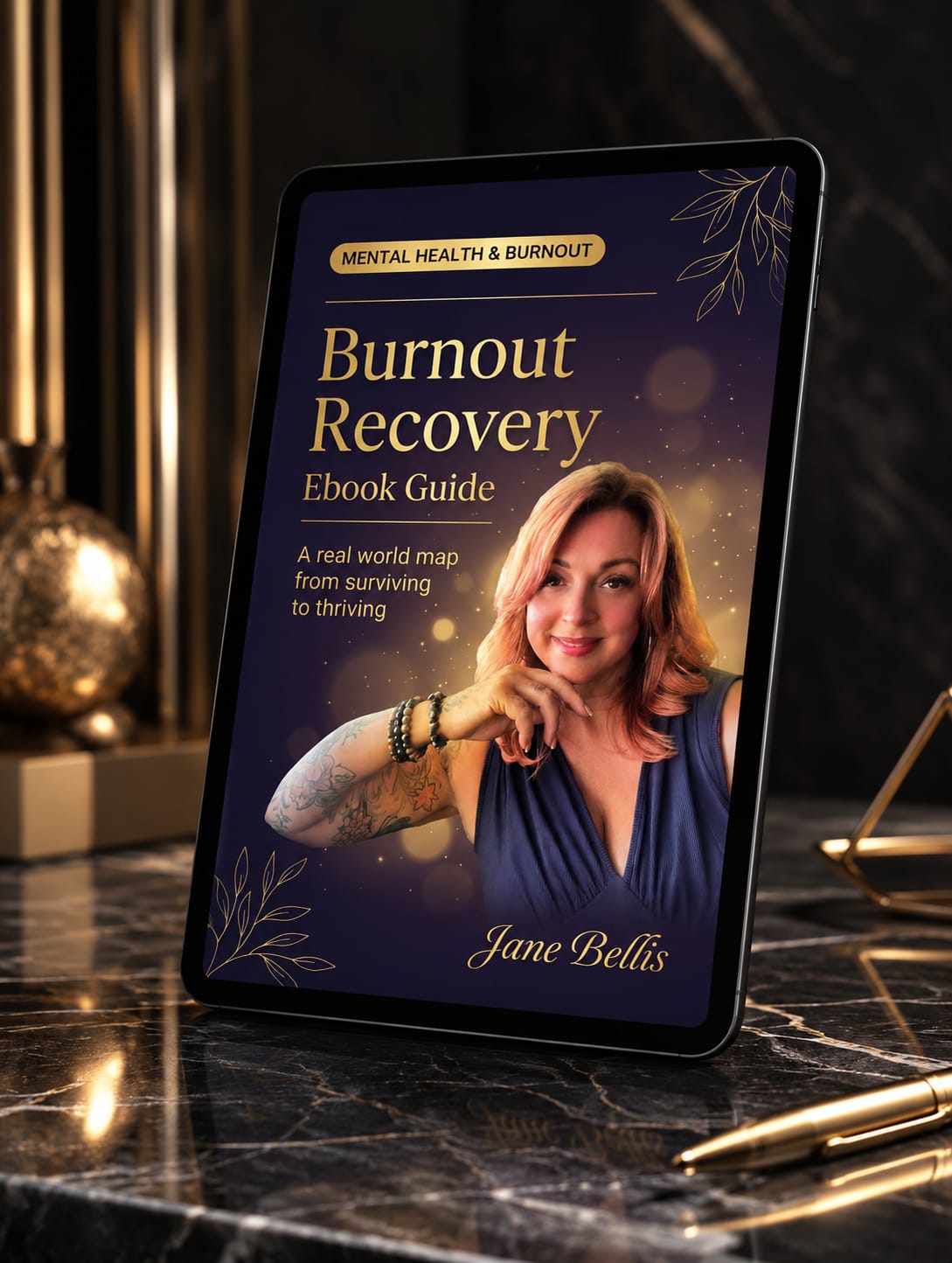
Burnout Recovery Guide
A practical recovery companion for women who want a clear step-by-step path from exhaustion to steadier energy.
Get the guide
Burnout to Breakthrough
A structured self-paced course for women over 40 who need a realistic recovery framework and guided support.
View the course
One-to-One Live Session
For readers who need personal guidance, reflection, and a more human conversation about the next step.
Explore live support- Burnout is a syndrome caused by chronic workplace stress that has not been successfully managed. The World Health Organization classifies it as an occupational phenomenon rather than a medical disease.
- Recovery is a process, not an event. Most people recover through gradual changes in workload, boundaries, rest, emotional regulation, and daily habits rather than one dramatic intervention.
- Women over 40 often experience layered burnout. Career demands, caregiving, invisible emotional labour, and life transitions frequently overlap, making recovery more complex than simply reducing work hours.
- The Burnout Recovery Guide™ in this guide provides a practical five-stage framework — Stabilise, Restore, Rebuild, Strengthen, and Sustain — drawn from Jane's holistic Medicine Wheel approach to whole-person recovery.
- Self-help has limits. If burnout is accompanied by severe depression, suicidal thoughts, chest pain, inability to function, or significant unexplained weight loss, professional medical assessment is essential rather than relying on self-guided recovery alone.
What Is a Burnout Recovery Plan?
A burnout recovery plan is a structured roadmap that helps you reduce chronic stress, restore physical and emotional energy, rebuild healthy routines, and prevent future burnout through sustainable lifestyle and behavioral changes.
Unlike a simple self-care checklist, a recovery plan follows a sequence. It recognizes that burnout affects the body, mind, emotions, relationships, and work simultaneously. Trying to fix only one of these areas often leads to temporary improvement followed by relapse.
The World Health Organization defines burnout as a syndrome resulting from chronic workplace stress that has not been successfully managed. It is characterized by three dimensions:
- feelings of energy depletion or exhaustion;
- increased mental distance from work or feelings of cynicism;
- reduced professional efficacy.
Importantly, the WHO also states that burnout specifically relates to the occupational context and should not automatically be used to describe every form of exhaustion in life. That distinction matters because symptoms that appear to be burnout may sometimes reflect depression, anxiety disorders, chronic illness, or other medical conditions requiring professional assessment.
Oh! You can go through our latest blog: 9 Best Burnout Recovery Books That Actually Help (Expert Picks for Women Over 40 in 2026)
A burnout recovery plan is a step-by-step strategy for recovering from chronic stress by restoring energy, improving recovery capacity, rebuilding healthy boundaries, and reducing the factors that caused burnout in the first place.
Research Insight
Christina Maslach's decades of research shows that burnout is not simply about working long hours. It often develops when there is a persistent mismatch between a person and their work environment, including workload, control, reward, fairness, community, and personal values.
Why Most Burnout Recovery Plans Fail
Most burnout recovery plans fail because they focus on symptom relief instead of system recovery.
Many people believe recovery means sleeping longer, taking a holiday, or practicing occasional mindfulness. While these strategies can help temporarily, they rarely change the conditions that created burnout.
Think about a woman juggling a full-time job, ageing parents who need her, a household that doesn't run itself, and a habit of saying yes before she's even finished reading the message. A weekend away might help her breathe again — but the moment she walks back through the door, the same pile is waiting. Rest alone can't fix a system that was designed to drain her.
That's not a willpower problem. That's a structural one
Burnout researchers increasingly describe this as an imbalance between demands and recovery. When physical, emotional, and cognitive demands consistently exceed the body's ability to recover, exhaustion accumulates over time.
Another common mistake is believing that burnout reflects personal weakness. The evidence suggests otherwise. Burnout is strongly influenced by chronic workload, organisational conditions, lack of control, poor psychological safety, and prolonged emotional demands—not simply a lack of resilience.
Quick Answer
Burnout recovery often fails because people try to remove symptoms without changing the patterns, workload, boundaries, and recovery habits that created burnout.
Research Insight
Maslach and colleagues identify six workplace areas consistently linked with burnout risk: workload, control, reward, community, fairness, and values. Improving the fit between people and these six areas is associated with lower burnout risk than relying on individual resilience alone.
The Burnout Recovery Guide™
Burnout Recovery Guide by Jane Bellis
Use this alongside the recovery plan when you want a practical guide that helps you work through the stages with structure and clarity.
Get instant accessMost recovery advice feels overwhelming because it presents dozens of disconnected tips. To make the process practical, this guide introduces an original five-stage framework:
|
Stage |
Primary Goal |
Main Question |
|
Stage 1 – Stabilise |
Reduce immediate overload |
What must stop today? |
|
Stage 2 – Restore |
Recover physical and emotional energy |
How can I help my body recover? |
|
Stage 3 – Rebuild |
Create healthier habits and boundaries |
What needs to change permanently? |
|
Stage 4 – Strengthen |
Increase long-term resilience |
How do I protect my recovery? |
|
Stage 5 – Sustain |
Prevent relapse |
How do I maintain this new way of living? |
This blueprint is informed by the same whole-person, trauma-aware approach that underpins all of the work at Mojo School - addressing the mental, physical, emotional, and spiritual dimensions of recovery rather than treating burnout as a purely workplace problem
It’s not designed as a rigid timetable. Some people move through these stages within weeks, while others require months. Recovery is rarely linear. You may revisit earlier stages whenever new life pressures emerge.
Stage 1: Stabilise — Create Safety Before You Create Change
The first stage of any effective burnout recovery plan is stabilisation. Before you try to become more productive, rebuild routines, or set ambitious goals, your body and mind need enough safety to stop operating in constant survival mode. I know that might feel counterintuitive, especially if you're someone who keeps going no matter what. But pushing through burnout is like flooring the accelerator when the engine warning light is on. The car will keep moving - until it doesn't.
This stage is not about giving up. It's about giving yourself enough ground to stand on.
Many people make the mistake of trying to "push through" burnout. However, persistent overload gradually reduces your capacity to think clearly, regulate emotions, make decisions, and recover from everyday demands. This is why simple tasks can begin to feel surprisingly difficult during burnout.
During this stage, your objective is not to solve every problem. Instead, it is to reduce unnecessary pressure while giving your nervous system the opportunity to settle.
What To Do Today
- Identify one commitment you can postpone, delegate, or decline.
- Protect one uninterrupted period each day for genuine rest.
- Reduce exposure to unnecessary digital notifications and constant multitasking.
- Prioritise regular meals, hydration, and consistent sleep schedules rather than perfection.
What To Avoid Today
- Making major life decisions while severely exhausted.
- Adding new projects because you feel guilty.
- Comparing your recovery to someone else's timeline.
- Using caffeine, alcohol, or overwork to suppress exhaustion.
Why It Matters
Stabilization creates the foundation for every later stage. Without reducing overload first, attempts to improve productivity or motivation often become another source of stress.
Quick Answer
Stage 1 focuses on creating enough physical and psychological safety for recovery to begin. Recovery starts by reducing unnecessary demands before introducing new habits.
Stage 2: Restore — Help Your Mind and Body Recover
Recovery begins when your body has enough time, energy, and safety to repair itself. After reducing immediate overload in Stage 1, the next priority is to restore your physical, emotional, and cognitive capacity. This stage is not about becoming productive again—it is about rebuilding the foundation that burnout gradually eroded.
Many people become frustrated because they still feel exhausted after taking a few days off. That is normal. Burnout develops over months or years, and meaningful recovery usually takes longer than a short holiday. Research suggests that recovery is supported when periods of stress are balanced with genuine opportunities for physical and psychological restoration rather than continuous activation. Occupational burnout research also emphasises that reducing chronic demands while increasing recovery opportunities is an important part of long-term improvement.
Quick Answer
Stage 2 focuses on restoring your body's recovery capacity through sleep, nutrition, movement, emotional regulation, and nervous system recovery rather than trying to increase productivity.
Research Insight
Studies on occupational recovery consistently show that high job demands combined with insufficient recovery increase burnout risk. Rest becomes effective when it is regular, protected, and combined with meaningful reductions in ongoing stressors rather than occasional breaks alone.
Understanding Recovery Capacity
One of the biggest misunderstandings about burnout is believing that recovery simply means "getting more sleep."
Sleep is essential, but recovery capacity is much broader. It includes your body's ability to recover physically, your brain's ability to process information without becoming overwhelmed, and your emotional ability to cope with everyday challenges.
When recovery capacity is low, even small tasks can feel exhausting. Answering emails, making simple decisions, preparing dinner, or having conversations may suddenly require far more effort than before.
This is not laziness.
It is a predictable consequence of prolonged stress.
Nervous System Regulation Matters
Burnout is closely linked to prolonged activation of the body's stress response. While popular discussions often oversimplify this as "adrenal fatigue," major medical organisations do not recognise adrenal fatigue as an established medical diagnosis. Instead, current evidence supports focusing on chronic stress, sleep, emotional regulation, and healthy recovery behaviours rather than unsupported hormonal claims.
Gentle breathing exercises, spending time outdoors, mindfulness practices, light physical activity, and meaningful social connection may help activate the parasympathetic nervous system—the body's natural "rest and recover" response.
Action Box
What to do today
- Aim for a consistent bedtime rather than perfect sleep.
- Drink enough water throughout the day.
- Eat regular meals instead of skipping them.
- Spend at least 20 minutes outdoors.
- Practice five minutes of slow breathing.
What to avoid today
- Excess caffeine to fight exhaustion.
- Doomscrolling late at night.
- Working through every lunch break.
- Feeling guilty about resting.
Why it matters
Your body is extraordinarily good at healing - when it's given the signal that the emergency is over. Recovery can't happen while you're still in survival mode. The gentlest, most powerful thing you can do right now is convince your nervous system that it's safe to rest. Everything else builds from there
7 Best Online Burnout Recovery Courses for Women Over 40
Stage 3: Rebuild — Create a Life That No Longer Produces Burnout
Recovery is not complete when you feel better.
Recovery is complete when your daily life no longer recreates the conditions that caused burnout.
This is where many people relapse. They begin feeling stronger, immediately return to their previous workload, say yes to every request, and slowly rebuild the same pattern that exhausted them in the first place.
Stage 3 is about redesigning your habits, routines, boundaries, and expectations.
Quick Answer
Stage 3 helps you replace burnout-producing habits with sustainable routines that protect your physical and emotional wellbeing.
Research Insight
Burnout researchers consistently identify workload, lack of control, unfairness, and value conflict as major contributors to burnout. Changing daily habits alone is helpful, but long-term recovery often also requires changes to the environments creating chronic stress.
Boundary Setting
Healthy boundaries are not selfish.
They protect your recovery capacity.
Women over 40 often carry invisible responsibilities that are never formally recognised—remembering birthdays, organising appointments, checking on relatives, managing children's schedules, and supporting colleagues emotionally.
These invisible demands accumulate.
Learning to say "not today" is often more powerful than learning another productivity system.
Emotional Regulation
Burnout affects emotional regulation.
Small frustrations may suddenly feel overwhelming.
Simple disagreements may trigger tears, anger, or complete withdrawal.
This happens because prolonged stress reduces the brain's capacity to regulate emotional responses efficiently.
Self-compassion becomes particularly important during this stage.
Rather than asking,
"Why can't I cope anymore?"
try asking,
"What does my body need today?"
That small shift often changes the entire recovery experience. And if you get it wrong on a Tuesday - if you snap, or cry, or cancel plans, or eat the entire biscuit tin, that's not failure. That's a human being in the middle of something hard. Start again on Wednesday.
Decision Fatigue
Another overlooked symptom is decision fatigue.
After months of constant pressure, even choosing dinner or replying to messages may feel exhausting.
Reduce unnecessary decisions wherever possible.
Create simple routines.
Repeat healthy habits.
Remove avoidable choices.
Every decision you eliminate preserves energy for what truly matters.
Action Box
What to do today
- Say no to one unnecessary request.
- Simplify tomorrow's schedule.
- Delegate one responsibility.
- Write down three non-negotiable boundaries.
What to avoid today
- Trying to please everyone.
- Believing productivity equals worth.
- Comparing yourself to your pre-burnout self.
Why it matters
Recovery becomes sustainable when your daily habits support your wellbeing instead of constantly draining it.
High-Functioning Burnout in Women: The Exhaustion Nobody Can See
Stage 4: Strengthen — Build Long-Term Resilience
Feeling better is encouraging.
Staying better requires a different mindset.
Stage 4 focuses on strengthening the systems that protect your wellbeing over time.
Here's something I want to reframe for you. Resilience isn't the ability to keep going no matter what - that's just endurance, and eventually, endurance runs out.
Real resilience is knowing when to stop, rest, and restore yourself before you hit empty.
It's a skill.
And it's one you can build.
Quick Answer
Stage 4 strengthens your recovery by building routines, relationships, and environments that make future burnout less likely.
Research Insight
Research increasingly highlights the importance of psychological safety, supportive relationships, meaningful work, and adequate recovery opportunities as protective factors against burnout.
Psychological Safety
People recover better when they feel safe expressing concerns, asking for help, and setting limits.
If every conversation feels risky, your nervous system rarely relaxes.
Whether at home or work, psychological safety matters.
Recovery Habits
Instead of relying on motivation, create systems.
Examples include:
- regular walking
- weekly planning
- protected evenings
- digital boundaries
- realistic workloads
- monthly self-checks
Small consistent habits outperform occasional dramatic changes.
Action Box
What to do today
- Schedule recovery before scheduling work.
- Protect one evening this week.
- Spend time with someone who makes you feel emotionally safe.
What to avoid today
- Filling every free hour with commitments.
- Assuming burnout will never return.
- Ignoring early warning signs.
Why it matters
Long-term recovery depends less on motivation and more on consistent systems that protect your wellbeing.
What’s Your Burnout Pattern? 6 Ways Burnout Actually Shows Up in Women
Stage 5: Sustain — Prevent Relapse Before It Starts
Burnout recovery does not end when you feel energetic again.
It ends when your lifestyle consistently supports your wellbeing without requiring constant willpower.
Relapse prevention is therefore the final stage of the Burnout Recovery Blueprint™.
Many people only notice burnout once they are already exhausted.
Instead, learn to recognise early warning signs.
Examples include:
- increasing irritability
- poor sleep
- emotional numbness
- losing enjoyment
- constant busyness
- skipping meals
- saying yes to everything again
These signs are opportunities to adjust before burnout returns.
Stage 5 helps you maintain recovery by recognising early warning signs, reviewing your boundaries regularly, and protecting your recovery habits throughout changing life circumstances.
Research Insight
Burnout prevention is generally more effective than burnout treatment. Early recognition of increasing stress, combined with timely adjustments to workload and recovery behaviours, reduces the likelihood of severe burnout developing.
Action Box
What to do today
- Review your energy every Friday.
- Protect at least one recovery activity every week.
- Reassess commitments every month.
What to avoid today
- Assuming recovery is permanent.
- Ignoring small warning signs.
- Waiting until complete exhaustion returns.
Why it matters
Burnout prevention is far easier than burnout recovery. This is how you move from surviving to truly thriving - not by being stronger, but by being smarter about what you protect
7-Day Emergency Burnout Recovery Plan
If you feel like you're barely functioning, don't try to change your entire life overnight. The first week should focus on creating enough physical and emotional stability to begin recovering.
|
Day |
Focus |
One Action |
|
Day 1 |
Pause |
Remove one non-essential commitment and tell someone you need support. |
|
Day 2 |
Sleep |
Establish a consistent bedtime and reduce screen time one hour before bed. |
|
Day 3 |
Nourish |
Eat three balanced meals and drink enough water throughout the day. |
|
Day 4 |
Boundaries |
Say "no" to one unnecessary request without apologising excessively. |
|
Day 5 |
Move |
Take a gentle 20–30 minute walk or do light stretching. |
|
Day 6 |
Connect |
Spend time with someone who makes you feel emotionally safe. |
|
Day 7 |
Reflect |
Write down what has improved and what still feels overwhelming. |
Quick Answer
The goal of the first seven days is not full recovery. It is to reduce overload, restore a sense of safety, and create enough energy to begin longer-term healing.
Burnout Recovery Plan Template: A 30-Day Starting Point
Burnout recovery happens through small, consistent actions rather than dramatic life changes. Use the 30-day structure below as a personal burnout recovery plan, not a rigid timetable. Start with the stage that best matches your current capacity, use the daily tracker to notice what helps, and adjust the plan each week rather than trying to do everything at once.
Week 1 — Stabilise
Goal: Reduce immediate overload.
Focus on:
- Sleep routine
- Regular meals
- Hydration
- Gentle movement
- Reducing unnecessary commitments
Week 2 — Restore
Goal: Increase recovery capacity.
Focus on:
- Nervous system regulation
- Emotional awareness
- Digital boundaries
- Nature exposure
- Rest without guilt
Week 3 — Rebuild
Goal: Create healthier routines.
Focus on:
- Boundary setting
- Time management
- Delegation
- Self-compassion
- Values-based decision making
Week 4 — Sustain
Goal: Prevent relapse.
Focus on:
- Weekly reviews
- Recovery rituals
- Healthy relationships
- Protecting recovery time
- Long-term planning
Research Insight
Research consistently suggests that sustainable behaviour change is more effective than attempting to change multiple habits simultaneously. Small improvements maintained over time generally produce better long-term outcomes than short periods of intense effort.
Burnout Recovery Planner: Daily Energy Tracker
Complete this in two minutes every evening.
|
Area |
Score (1–10) |
|
Physical Energy |
|
|
Emotional Energy |
|
|
Mental Focus |
|
|
Stress Level |
|
|
Sleep Quality |
|
|
Mood |
Reflection:
What gave me energy today?
What drained my energy today?
One thing I will change tomorrow
Burnout Recovery Plan Template: Weekly Reflection
At the end of each week, ask yourself:
Wins
What helped me feel better this week?
Challenges
What situations increased my stress?
Boundaries
Did I protect my time?
Where did I overcommit?
Recovery
Which recovery habits actually worked?
Next Week
What is one realistic improvement I can make?
Boundary Checklist
Tick each statement honestly.
☐ I can say no without excessive guilt.
☐ I protect time for recovery.
☐ I do not answer every message immediately.
☐ I ask for help when needed.
☐ I allow myself to rest before complete exhaustion.
☐ I regularly review my workload.
☐ My commitments reflect my priorities.
If you answered "No" to four or more statements, strengthening your boundaries should become a priority over the coming weeks.
Recovery Progress Scorecard
Rate yourself from 1 (Never) to 5 (Always).
|
Statement |
Score |
|
I sleep consistently |
|
|
I eat regular meals |
|
|
I take meaningful breaks |
|
|
I maintain healthy boundaries |
|
|
I recover after stressful days |
|
|
I ask for support |
|
|
I feel hopeful about recovery |
|
|
I protect my wellbeing |
Results
32–40: Excellent recovery progress.
24–31: Good progress. Continue building consistency.
16–23: Recovery is improving but needs more structure.
Below 16: Consider seeking additional support, such as a structured programme or professional guidance.
Relapse Prevention Checklist
Recovery is successful when you notice warning signs early.
Review this checklist every month.
☐ I am sleeping well.
☐ I enjoy activities outside work.
☐ I rarely feel emotionally numb.
☐ I am not constantly rushing.
☐ I can switch off from work.
☐ I have realistic expectations of myself.
☐ My relationships feel supportive.
☐ My workload is sustainable.
If several boxes remain unticked for more than two weeks, it may be time to revisit earlier stages of the Burnout Recovery Blueprint™.
When Should You Seek Professional Help?
One-to-One Live Session
If you need individual support to decide what to do next, a live session can help you turn the recovery plan into a realistic personal action path.
Explore live supportA burnout recovery plan is designed to support people experiencing chronic stress and emotional exhaustion. However, self-help has limits.
You should seek prompt assessment from a qualified healthcare professional if you experience:
- Persistent inability to function at work or home.
- Thoughts of self-harm or suicide.
- Severe depression or hopelessness.
- Panic attacks that interfere with daily life.
- Chest pain, fainting, or other concerning physical symptoms.
- Significant unexplained weight loss or gain.
- Ongoing insomnia despite lifestyle changes.
- Heavy reliance on alcohol or drugs to cope.
Burnout can exist alongside depression, anxiety disorders, or medical conditions that require professional diagnosis and treatment. Seeking help is not a sign of failure—it is an important part of recovery.
Self-Guided Recovery vs Structured Course vs Coaching
Different people need different levels of support.
If you are comparing structured support rather than following a self-guided plan, see our guide to the best burnout recovery programs before choosing a course or coaching route.
Self-Guided Recovery
This may be enough if:
- Your symptoms are mild to moderate.
- You enjoy learning independently.
- You can consistently apply what you learn.
Structured Burnout Recovery Course
A structured course is often helpful when:
- You know what to do but struggle to stay consistent.
- You want a clear step-by-step recovery framework.
- You prefer guided lessons and practical exercises.
- You feel overwhelmed by conflicting advice online.
This is exactly where the MyMojoSchool ‘Burnout to Breakthrough’ Burnout Recovery Course comes in.
It's built specifically for women who know what they should be doing but are struggling to do it consistently - giving you a clear, step-by-step recovery framework with guided lessons, practical tools, and the kind of support that makes the difference between knowing and actually doing.
It’s accredited by CPD Group, CMA, and IPHM, and designed to work around your real life, not an idealised version of it.
Coaching
Coaching may be appropriate if:
- You need personalised accountability.
- Your burnout is closely linked to leadership, business ownership, or career decisions.
- You want support applying recovery strategies to your own circumstances.
Final Thoughts
Burnout recovery is not about becoming the person you were before burnout.
It is about becoming someone who no longer has to sacrifice their health to succeed.
The Burnout Recovery Blueprint™ is designed to help you move gradually from survival to sustainable wellbeing. Recovery will not always be linear. Some weeks will feel easier than others, but every single step forward, no matter how small is you moving from surviving to thriving. And that is always worth celebrating.
What matters is continuing to move forward with patience, self-compassion, and realistic expectations.
If you're ready to take the next step, begin with the strategies in this guide. If you find yourself needing more structure, guided lessons, and practical implementation, a well-designed burnout recovery programme can help turn knowledge into consistent action.
Written by
Jane Bellis
Founder, MyMojoSchoo.coml
Jane Bellis is the founder of Mojo School for Holistic Wellness (MyMojoSchool) - an accredited online learning platform helping people move from surviving to thriving through the Medicine Wheel framework.
Jane's work blends neuroscience, ancient wisdom, and trauma-informed coaching to make mental wellbeing genuinely practical and accessible for everyone. Accredited by CPD Group, CMA, and IPHM, and endorsed by ACCPH.
Based in North Wales, with a deep belief that real recovery starts when we stop trying to be who we were and start becoming who we actually want to be.
Reviewed by
MyMojoSchool Editorial Team
Reviewed for clarity, responsible health communication, factual accuracy, and practical usefulness.
AI Transparency Statement
Some parts of this article were developed with AI-assisted drafting and subsequently reviewed, edited, and fact-checked by human editors. It is intended for educational purposes only and should not be used as a substitute for personalised medical, psychological, or mental health advice from a qualified healthcare professional.
Frequently Asked Questions
How long does burnout recovery usually take?
Burnout recovery timelines vary considerably depending on the severity of burnout, ongoing stressors, physical health, sleep quality, workplace conditions, and available support. Some people notice improvements within a few weeks after reducing stress, while others may need several months or longer to recover fully. Recovery is usually gradual rather than linear.
Can burnout be cured completely?
Many people recover from burnout and regain their energy, motivation, and wellbeing. However, burnout can return if the underlying causes remain unchanged. Long-term recovery focuses on building healthier boundaries, improving recovery habits, and recognising early warning signs before exhaustion becomes severe again.
What is the fastest way to recover from burnout?
There is no evidence-based shortcut for burnout recovery. The most effective approach combines reducing chronic stress, improving sleep, restoring physical health, strengthening social support, and gradually rebuilding sustainable daily routines. Quick fixes often provide temporary relief but rarely solve the underlying problem.
What should I avoid during burnout recovery?
Avoid trying to compensate for burnout by working harder, skipping rest, overusing caffeine or alcohol, constantly multitasking, or expecting yourself to recover immediately. Recovery also becomes more difficult when people continue saying yes to every request despite feeling exhausted.
Can I recover from burnout without quitting my job?
In many cases, yes. Recovery does not always require leaving your job. Some people recover by adjusting workload, improving boundaries, taking leave, receiving workplace support, or changing how work is organised. However, if the workplace remains consistently harmful and meaningful changes are impossible, changing roles or employers may become part of long-term recovery.
What is the difference between burnout and depression?
Burnout primarily relates to chronic occupational stress and often improves when work-related stressors are reduced. Depression is a medical condition that affects many areas of life and usually requires professional assessment and treatment. The two conditions can occur together, which is why persistent or severe symptoms should always be discussed with a qualified healthcare professional.
Is burnout recovery different for women over 40?
Yes. Women over 40 often experience burnout alongside caregiving responsibilities, leadership demands, hormonal changes, emotional labour, and major life transitions. Recovery therefore needs to address both external pressures and personal wellbeing rather than focusing only on workplace stress.
When should I seek professional help for burnout?
You should seek professional assessment if your symptoms become severe, persist despite self-care, significantly interfere with daily functioning, or include suicidal thoughts, severe depression, panic attacks, chest pain, or other concerning physical symptoms. Self-help resources can be valuable, but they should never replace appropriate medical or psychological care when it is needed.
Ready to move from surviving to recovering?
Use the guide, course, or live support option that matches your current capacity and the stage of recovery you are in.
Start with Burnout to Breakthrough