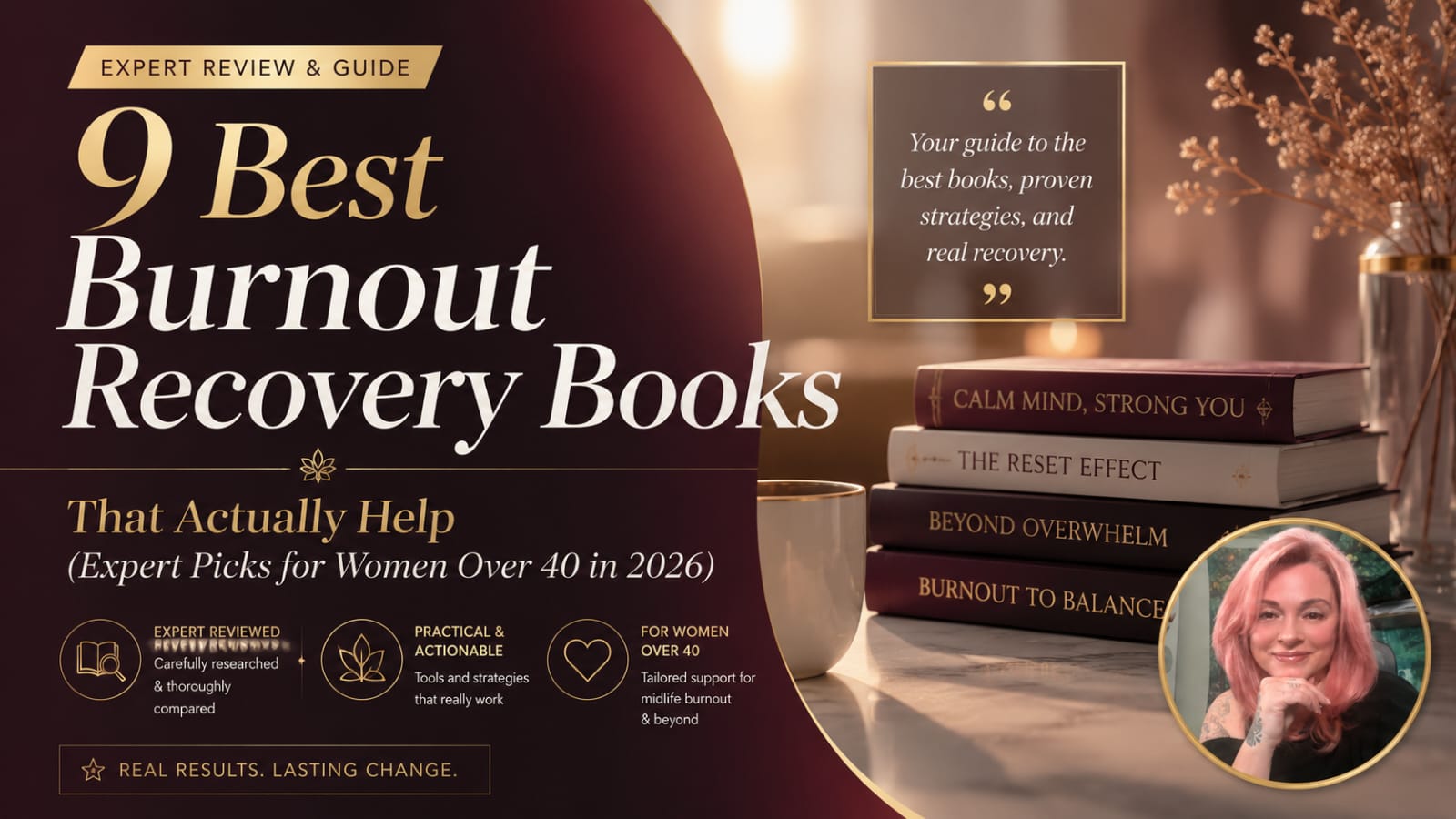
9 Best Books on Burnout Recovery for Women Over 40 (2026)
You've probably Googled
'burnout recovery books' late at night when you couldn't sleep — hoping someone
would finally make sense of why you feel so utterly depleted. And then spent
twenty minutes scrolling through reviews that tell you to 'take a bubble bath'
or 'set better boundaries' without ever explaining HOW.
This guide is different. I've read and compared these books on burnout recovery so you don't have to start from
scratch — helping you find the title that actually fits where you are right now, not where you think you should be. Whether you are looking for books about burnout, a practical recovery workbook, or the best book for burnout recovery for your current stage, the comparison below makes the differences clear. For
the full recovery framework this list draws on, see the burnout recovery
guide.
Here, I compare the nine best burnout recovery books available today. Rather than recommending the most famous title, I'll help you choose the book that best fits your stage of burnout, you’re learning style, and the kind of support you actually need.
What's Your Burnout Type?
Take the 60-Second Assessment
Know what's really draining your energy—and discover your personalised recovery path.
Key Takeaways
- The best burnout recovery book is the one that matches your type of burnout, not simply the one with the highest sales.
- Women over 40 often experience burnout differently because work pressure overlaps with caregiving, hormonal changes, emotional labour, and life transitions.
- Practical books generally produce better results than books that only explain burnout without offering a recovery framework.
- The Burnout Recovery Guide (paid digital ebook) by Jane Bellis is our Editor's Choice — a practical, whole-person recovery guide grounded in the Medicine Wheel framework and accredited by the CPD Group, CMA, and IPHM
- Science-based books by Emily Nagoski, Christina Maslach, and Jennifer Moss remain essential for understanding the psychology and workplace causes of burnout.
- Books work best when combined with sustainable lifestyle changes, healthy boundaries, and, where appropriate, professional support.
What Is a Burnout Recovery Book?
A burnout recovery book is a book designed to help readers understand burnout, recover from chronic stress, rebuild emotional wellbeing, and prevent future burnout.
Unlike general self-help books, good burnout recovery books explain why burnout develops, why simple rest often isn't enough, and what practical actions support long-term recovery.
According to the World Health Organization (WHO), burnout is an occupational phenomenon caused by chronic workplace stress that has not been successfully managed. It is characterized by:
- emotional exhaustion
- increased mental distance from work
- reduced professional effectiveness
(Source: WHO)
Here in the UK, the scale of
burnout is significant. The Health and Safety Executive (HSE) reported that in
2023/24, an estimated 776,000 UK workers were suffering from work-related
stress, depression, or anxiety — leading to 17.1 million lost working days.
Stress and burnout now account for 49% of all work-related ill health in
Britain. (Source: HSE, Work-Related Stress Statistics in Great Britain, 2024)
The picture for women in mid-life is particularly striking. The CIPD's 2023
Menopause in the Workplace report found that 67% of women aged 40–60 said
menopause symptoms negatively affected their work performance — and burnout symptoms
(exhaustion, brain fog, emotional overwhelm) closely mirror perimenopause and
menopause symptoms, making it even harder for women to get the right support at
the right time.
(Sources: HSE Statistics|
CIPD Menopause in the Workplace 2023)
For women over 40, burnout often extends beyond work. Family responsibilities, caring for ageing parents, raising children, relationship pressures, hormonal changes, and years of putting everyone else's needs first often combine into one overwhelming experience — which is why mum burnout recovery so often looks different from standard workplace advice.
A 2024 CIPD Health & Wellbeing at Work report confirmed that stress remains the single biggest cause of long-term sickness absence in UK workplaces - and women in mid-career are disproportionately affected, often managing the demands of both paid work and unpaid caring responsibilities at the same time.
(Source: CIPD Health & Wellbeing at Work 2024)
The right book should acknowledge this complexity rather than treating burnout as simply "working too hard."
Why Do Burnout Recovery Books Matter?
Burnout recovery books matter because they provide clarity, validation, and structure when people often feel overwhelmed and unable to think clearly.
One of the hardest parts of burnout is believing that something is wrong with you. Many people blame themselves for being "lazy," "weak," or "not resilient enough." Good books replace that shame with understanding.
Research consistently shows that psychoeducation—the process of understanding what is happening psychologically—can reduce distress and improve coping behaviours. Books give readers language for experiences they often struggle to describe, including why burnout recovery takes so long in the first place.
They also provide something equally important:
A roadmap.
Instead of random wellness advice collected from social media, the best burnout recovery books organize recovery into manageable stages — similar to how a burnout recovery week by week guide breaks the process down.
For many women over 40, this structure feels like permission to stop surviving and begin recovering.
9 Best Books on Burnout Recovery: Quick Comparison
|
Book |
Best For |
Practical |
Rating |
||
|
Burnout Recovery Guide |
Women over 40 |
⭐⭐⭐⭐⭐ |
4.8/5 |
||
|
Burnout |
Understanding stress cycles |
⭐⭐⭐⭐ |
4.7/5 |
||
|
The Burnout Workbook |
Guided exercises |
⭐⭐⭐⭐⭐ |
4.6/5 |
||
|
The Burnout Challenge |
Workplace burnout |
⭐⭐⭐⭐ |
4.7/5 |
||
|
The Burnout Epidemic |
Professionals & leaders |
⭐⭐⭐ |
4.4/5 |
||
|
Can't Even |
Cultural burnout |
⭐⭐ |
4.2/5 |
||
|
How We Break |
Fatigue & recovery |
⭐⭐⭐ |
4.3/5 |
||
|
Perimenopause Power |
⭐⭐⭐⭐ |
4.6/5 |
|||
|
Rest Is Resistance |
⭐⭐⭐⭐ |
4.5/5 |
|||
How I Evaluated These Books
Choosing the best burnout recovery books requires more than looking at Amazon ratings.
We reviewed every book using the following criteria:
- scientific credibility
- practical exercises
- readability during burnout
- suitability for women over 40
- emotional support
- workplace relevance
- implementation guidance
- long-term prevention strategies
Books that combined research with actionable recovery consistently ranked higher.
1. Burnout Recovery Guide — A Real World Map From Surviving To Thriving (paid digital ebook)
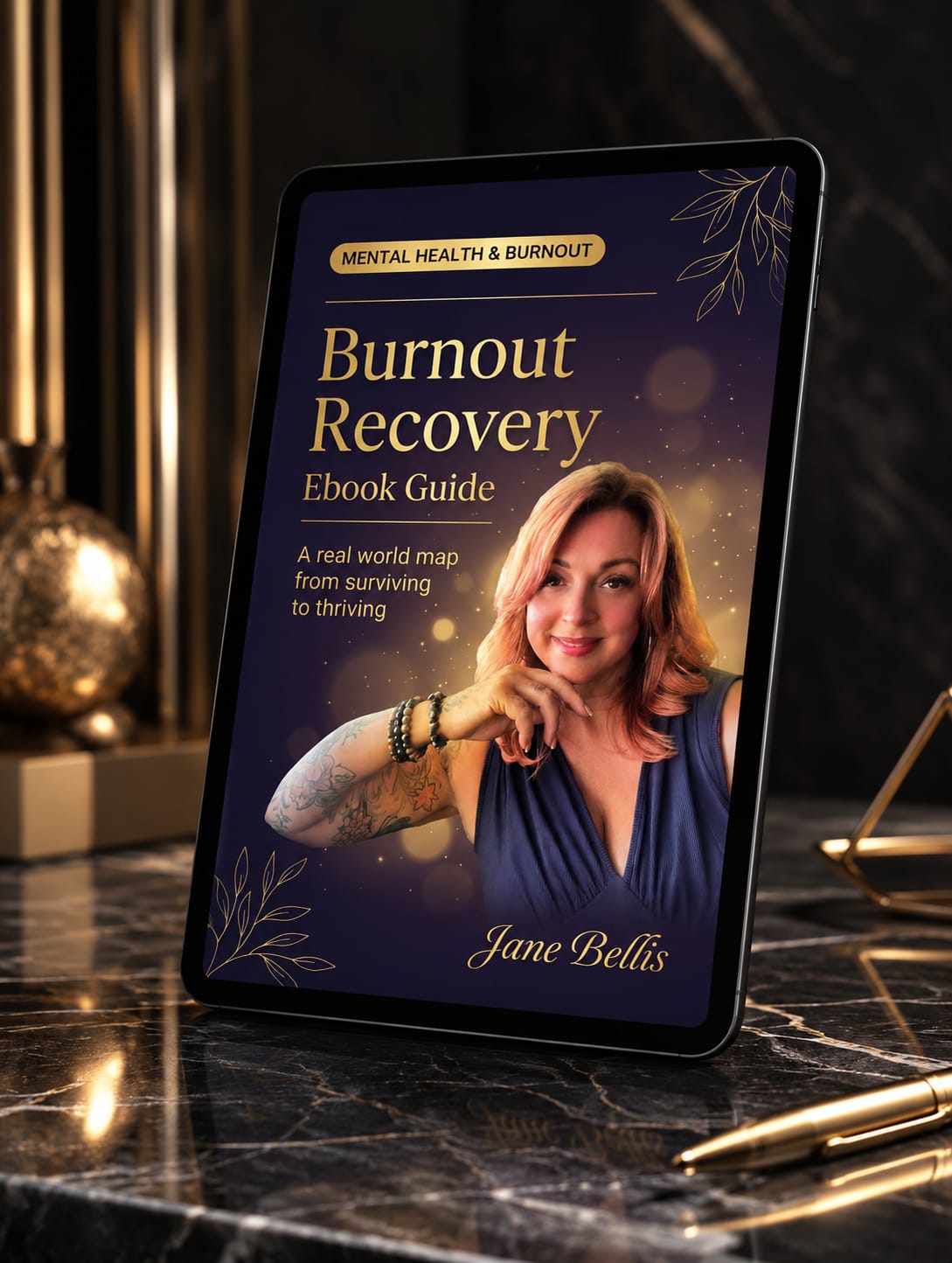
Burnout Recovery Guide by Jane Bellis
A practical digital guide for women over 40 who want a realistic recovery roadmap, not vague self-care advice.
Get instant accessAuthor: Jane Bellis
Best For: Women over 40 who want a realistic recovery plan.
Go to Purchase link:
Why We Recommend It
Our Editor's Choice is Burnout Recovery Guide because it addresses burnout as a whole-life experience rather than simply a workplace problem.
Instead of encouraging readers to become more productive, Jane Bellis focuses on helping women reconnect with themselves after years of emotional exhaustion – written from both lived experience and her life’s work as a professional Holistic Coach. Mentor and mental health specialist.
Unlike the retail books on this list, this is a paid digital download - instant access, no waiting for delivery, and designed to be read on any device.
The guide covers:
- nervous system recovery
- emotional regulation
- boundaries
- reducing invisible mental load
- rebuilding confidence
- preventing relapse
Perhaps its greatest strength is accessibility. The guide is also rooted in Jane's Medicine Wheel framework - a trauma-informed, whole-person approach that addresses mental, physical, emotional, and spiritual wellbeing together. This makes it particularly effective for women who feel depleted across multiple areas of their life, not just their working day
When someone is burned out, concentration is often poor. Heavy academic books can become frustrating. This guide is written in a supportive, conversational style that feels achievable even on difficult days.
Pros
- specifically written for women over 40
- practical recovery roadmap
- supportive tone
- easy to follow
- focuses on implementation
- Rooted in an accredited, trauma-informed framework (CPD Group, CMA, IPHM)
- Instant digital access — start reading immediately
Cons
- less academic than Maslach's work
- not intended as therapy
Verdict
If you're emotionally exhausted and don't know where to begin, this is the strongest overall choice.
2. Burnout: The Secret to Unlocking the Stress Cycle
Authors: Emily Nagoski & Amelia Nagoski
Best For: Women wanting to understand why burnout happens.
Where to find it: Search on Amazon
Few books have influenced burnout conversations as much as Burnout.
Rather than telling readers to simply relax, the Nagoski sisters explain the concept of the stress cycle.
Their central message is powerful:
Stress isn't completed simply because the stressful event ends.
Instead, the body often continues responding until the physiological stress cycle is completed.
This idea explains why many women still feel exhausted after holidays or weekends away.
The book combines neuroscience, psychology, and humour while remaining highly accessible.
Pros
- science-backed
- compassionate
- highly readable
- excellent explanation of emotional exhaustion
Cons
- fewer structured recovery exercises
- not specifically written for women over 40
Verdict
One of the best books for understanding burnout before beginning deeper recovery work.
3. The Burnout Workbook
Authors: Emily Nagoski & Amelia Nagoski
Best For: Readers who learn by doing.
Where to find it: Search on Amazon
Some readers don't want another book full of ideas.
They want exercises.
That's exactly where The Burnout Workbook excels.
Instead of simply explaining burnout, it encourages readers to actively work through recovery using journaling prompts, worksheets, reflection activities, and guided exercises.
This practical format makes it particularly helpful for readers who struggle to turn knowledge into action.
The workbook builds naturally on the ideas introduced in Burnout while encouraging gradual behaviour change rather than perfection.
Pros
- interactive
- practical
- encourages reflection
- excellent for journaling
Cons
- requires consistent participation
- may not provide enough support for severe burnout
Verdict
The best burnout recovery workbook currently available for readers who want structured exercises rather than passive reading.
4. The Burnout Challenge
Authors: Christina Maslach & Michael P. Leiter
Best For: Professionals, managers, and workplace burnout.
Where to find it: Search on Amazon
Christina Maslach is one of the world's leading burnout researchers, making this book essential for understanding why burnout is often a systems problem rather than a personal failure.
Rather than focusing solely on individual resilience, The Burnout Challenge examines how workload, control, fairness, reward, community, and organisational values contribute to burnout.
This perspective helps reduce self-blame and shifts attention towards healthier workplaces.
Pros
- exceptionally well researched
- workplace-focused
- evidence-based framework
- challenges burnout myths
Cons
- less personal than recovery-focused guides
- more analytical than practical
Verdict
An outstanding choice for professionals who want to understand the organisational causes of burnout.
5. The Burnout Epidemic
Author: Jennifer Moss
Best For: Professionals, managers, HR leaders, and anyone who wants to understand why burnout is often a workplace problem rather than an individual weakness.
Where to find it: Search on Amazon
Jennifer Moss takes a broader view of burnout than many self-help authors. Instead of asking, "Why can't people cope better?", she asks, "Why are so many workplaces creating burnout in the first place?"
Drawing on research from organisational psychology and workplace wellbeing, Moss argues that free yoga classes, wellness apps, and occasional mental health days cannot solve burnout if excessive workloads, poor leadership, and unhealthy workplace cultures remain unchanged.
This perspective is particularly valuable for women over 40 who have spent years believing they simply needed to become more organised or resilient. The book helps readers recognise that burnout is often rooted in structural problems rather than personal failure.
Pros
- Strong evidence-based workplace perspective
- Excellent for managers and leaders
- Challenges common burnout myths
- Encourages healthier organisational cultures
Cons
- Less focused on day-to-day personal recovery
- Not specifically written for women over 40
Verdict
One of the best books for understanding the organisational causes of burnout and why workplace change matters.
6. Can't Even
Author: Anne Helen Petersen
Best For: Readers interested in the cultural causes of burnout, productivity pressure, and modern work.
Where to find it: Search on Amazon
Unlike traditional burnout books, Can't Even explores burnout through the lens of modern culture. Anne Helen Petersen argues that many people—particularly millennials and professional women—have grown up believing that constant productivity is a measure of personal worth.
She examines how social media, digital connectivity, insecure employment, and the pressure to "have it all" contribute to chronic exhaustion.
Although this book offers fewer practical recovery exercises, it provides something equally valuable: validation. Many readers finish the book feeling that their exhaustion finally makes sense.
Pros
- Insightful cultural analysis
- Easy to read
- Challenges toxic productivity culture
- Helps reduce self-blame
Cons
- Few practical recovery exercises
- Less suitable for readers wanting a structured recovery plan
Verdict
A thought-provoking read for women who feel their burnout reflects broader cultural pressures rather than individual weakness.
Note: Written primarily from a millennial perspective, so some cultural references will feel more relevant to women in their late 30s - but the core arguments about productivity pressure and 'having it all' still resonate strongly for women in their 40s and 50s
7. How We Break
Author: Vincent Deary
Best For: Readers experiencing deep emotional, physical, and mental exhaustion.
Where to find it: Search on Amazon
Health psychologist Vincent Deary approaches burnout from a compassionate and deeply human perspective. Rather than focusing solely on workplace stress, he explores the cumulative effects of years of overwork, caregiving, illness, and emotional strain.
The book is particularly relevant for women over 40 because it recognises that exhaustion is often the result of countless small demands accumulating over many years.
Instead of offering quick fixes, Deary encourages readers to slow down, listen to their bodies, and rethink what sustainable living actually looks like.
Pros
- Thoughtful and compassionate
- Excellent discussion of long-term fatigue
- Psychologically rich
- Encourages sustainable recovery
Cons
- Less action-oriented than workbook-style guides
- Not specifically about workplace burnout
Verdict
An excellent reflective read for women who feel deeply depleted and want to better understand the emotional and physical impact of chronic stress.
8. Perimenopause Power
Author: Maisie Hill
Best For: Women over 40 navigating burnout alongside hormonal changes, perimenopause, or early menopause
Where to find it: Search on Amazon
Maisie Hill is one of the UK's leading voices on women's hormonal health, and Perimenopause Power is the book that explains what many women over 40 have quietly suspected: the burnout that won't lift may not be purely about workload. While most recovery books focus on stress management and lifestyle adjustments, Hill goes deeper — exploring how fluctuating oestrogen and progesterone levels directly affect energy, sleep, cognition, mood, and the body's capacity to recover. For women who feel like burnout recovery simply isn't working the way it should, this book is often the missing piece.
The relevance to burnout recovery is significant. Hormonal shifts can mimic and worsen burnout symptoms, creating a cycle that diet and rest alone struggle to break. Hill gives women the language to understand what's happening in their bodies, practical strategies to work with their changing hormonal landscape, and a clear framework for advocating for themselves in medical settings. Written by a UK-based women's health practitioner, it speaks directly to the Mojo School audience — women who have been told to rest more, only to find it's still not enough.
Pros
· Written by a UK-based women's health practitioner — highly relevant to a UK audience
· Directly addresses the hormonal dimension of burnout that most recovery books overlook
· Practical and evidence-based, with clear, actionable strategies
· Empowers women to understand their bodies and advocate for themselves in medical settings
Cons
· Focused specifically on perimenopause — less relevant for women earlier in their 40s not yet experiencing hormonal changes
· Some sections are dense with hormonal science, which may feel overwhelming during active burnout
Verdict
If burnout recovery hasn't been working the way you expected, Perimenopause Power may be the book that finally explains why. An essential read for any woman over 40 navigating exhaustion alongside hormonal change — and a compassionate, practical guide for those who are ready to understand the full picture of their recovery.
9. Rest Is Resistance
Author: Tricia Hersey (The Nap Bishop)
Best For: Women who struggle with the guilt of rest, hustle culture, or chronic overwork — and want to understand the deeper roots of burnout
Where to find it: Search on Amazon
Tricia Hersey, founder of the Nap Ministry and known widely as The Nap Bishop, takes a bold, unflinching look at why so many of us are exhausted. Rest Is Resistance is not a step-by-step recovery guide; it is a philosophical and spiritual case for reclaiming rest as an act of resistance against the systems that drive us into chronic depletion. Hersey argues that burnout is not just a personal health issue — it is the predictable result of a culture that has commodified human energy and labelled relentless productivity as a virtue.
Her central framework is both simple and radical: rest is not laziness; it is liberation. For women who know deep down that something is profoundly wrong with hustle culture but haven't yet found the language or the permission to step out of it, this book can be genuinely transformative. It is a permission slip — grounded in history, social justice, and the lived experience of women who have been taught to keep going long past empty.
Pros
· Challenges the cultural roots of burnout at a systemic level — a perspective missing from most recovery books
· Beautifully written — poetic, powerful, and deeply compassionate
· Permission-giving for women who struggle with the guilt of rest or feel they haven't 'earned' recovery
· Offers a spiritual and philosophical dimension that complements more practical recovery tools
Cons
· Less practical than other entries on this list — not a step-by-step recovery framework
· Philosophical and activist in tone, which may not suit readers looking for immediate, actionable tools
Verdict
Rest Is Resistance won't give you a plan — it will give you permission. And for many women in burnout, permission is exactly what recovery needs first. A powerful, paradigm-shifting read for anyone who feels the pull to keep going even when they're running on empty. Pair it with a more structured recovery guide for the full picture.
Which Burnout Recovery Book Is Best for Beginners?
The best burnout recovery book for beginners depends on what you need most right now.
If you're looking for a clear, practical recovery roadmap, Burnout Recovery Guide — A Real World Map From Surviving To Thriving is the strongest starting point. It explains burnout in straightforward language while providing practical steps that feel manageable even when your energy is low.
If your priority is understanding the science behind emotional exhaustion, Burnout by Emily and Amelia Nagoski remains one of the best introductory books available.
Readers who prefer learning through exercises rather than reading alone should begin with The Burnout Workbook.
Should You Choose a Book, Coaching, or an Online Course?
Different stages of burnout require different types of support. If you're still weighing whether structured support is worth it, read is a burnout recovery programme worth it — what women who've done one actually say.
Choose a burnout recovery book if:
- you want affordable self-paced learning
- you're in the early stages of burnout
- you enjoy reading and reflecting
- you want to understand what is happening
Choose an online burnout course if:
- you want a structured recovery framework
- you prefer video lessons and guided activities
- you benefit from step-by-step learning
- you need greater accountability
If you're comparing options, this review of the best burnout recovery courses breaks down what to look for.
Choose burnout recovery coaching if:
- your burnout feels complex or overwhelming
- you need personalised guidance
- you struggle to implement changes alone
- you want ongoing support and accountability
This review of burnout recovery coaches compares vetted options if you're ready for 1:1 support.
For many women over 40, the most effective sequence is:
Book → Online Course → Coaching (if needed).
This gradual approach allows you to build understanding before investing in more intensive support — see this burnout recovery plan for the full sequenced framework.
📌
UK-based? Don't forget these free resources:
→ NHS Talking
Therapies - free therapy for mild-to-moderate anxiety and depression
→ Mind
UK - practical information, local groups, and online tools
→ Your GP - always a good first call if you're unsure what level of
support you need
These work alongside books and courses, not instead of them. For a wider
comparison of paid and free options, see this roundup of
burnout recovery support.
Burnout Recovery Book Selection Checklist
Before buying a burnout recovery book, ask yourself these questions — and if you're weighing this against other recovery investments, see what's actually worth spending money on to recover from burnout:
|
Question |
Why It Matters |
|
Does this book match my type of burnout? |
Workplace, caregiving, emotional, and life-transition burnout require different approaches — including high functioning burnout, which is often the hardest to self-diagnose. |
|
Does it include practical exercises? |
Insight alone rarely creates lasting change. |
|
Can I comfortably read it while exhausted? |
Dense academic books may feel overwhelming during burnout. |
|
Does it acknowledge systemic causes of burnout? |
Good books avoid blaming individuals for structural problems. |
|
Does it include long-term prevention strategies? |
Recovery should reduce the risk of future burnout. |
Best Burnout Recovery Book: Final Recommendation
Every book in this guide offers something valuable, but they serve different purposes.
If you want to understand the science of stress, choose Burnout.
If you prefer guided exercises, choose The Burnout Workbook.
If you're interested in workplace research, The Burnout Challenge is difficult to beat.
If you want to understand organisational wellbeing, The Burnout Epidemic is an excellent choice.
If you're fascinated by the cultural roots of burnout, Can't Even offers valuable insight.
If you're seeking a compassionate reflection on exhaustion, How We Break is deeply rewarding.
If you are navigating burnout alongside hormonal changes or perimenopause, choose Menopause Power
If you struggle with the guilt of rest or want to understand the deeper cultural forces driving your exhaustion, Rest is Resistance will give you the language and permission to choose differently
However, for women over 40 looking for a practical, supportive, step-by-step recovery guide, our top recommendation remains:
Burnout Recovery Guide — A Real World Map From Surviving To Thriving
Rather than simply explaining burnout, it focuses on helping women rebuild energy, establish healthier boundaries, regulate their nervous system, and create sustainable daily habits that support long-term wellbeing.
Get instant access — Burnout Recovery Guide 40% off (paid digital ebook)
Join the MyMojoSchool Burnout Recovery Course for a structured recovery journey with practical lessons and ongoing support.
Frequently Asked Questions
What are the best books on burnout recovery?
The best books on burnout recovery depend on what you need most. For a practical step-by-step recovery roadmap, choose a guide or workbook with exercises. For the science of stress and emotional exhaustion, Burnout by Emily and Amelia Nagoski is a strong starting point. For workplace causes, books by Christina Maslach and Jennifer Moss are especially useful. This guide compares nine options by recovery need rather than popularity alone.
What is the best burnout recovery book for women over 40?
The best burnout recovery book for women over 40 depends on your stage of recovery and the type of support you need. If you're looking for a practical, step-by-step guide specifically designed for women experiencing emotional exhaustion, caregiving stress, and life transitions, Burnout Recovery Guide — A Real World Map From Surviving to Thriving is our top recommendation. If your priority is understanding the science behind burnout, Burnout by Emily and Amelia Nagoski is an excellent starting point.
Can reading a burnout recovery book really help you recover?
Yes, a good burnout recovery book can help you understand burnout, reduce self-blame, develop healthier boundaries, and create a realistic recovery plan. However, books work best when paired with consistent lifestyle changes. If your symptoms are severe or significantly affect daily functioning, professional medical or psychological support may also be necessary.
What is the difference between a burnout recovery book, workbook, and online course?
A burnout recovery book primarily helps you understand burnout and recovery strategies. A workbook adds guided exercises, journalling prompts, and reflection activities to help you apply what you learn. An online burnout recovery course provides a more structured learning experience through step-by-step lessons, practical tools, and ongoing guidance. Many people benefit from starting with a book before progressing to a course if they need additional structure and accountability.
Which burnout recovery book is best for beginners?
If you're new to burnout recovery, choose a book that combines clear explanations with practical guidance. Burnout Recovery Guide is suitable for beginners who want an easy-to-follow roadmap, while Burnout by Emily and Amelia Nagoski is ideal if you want a science-informed understanding of the stress cycle before exploring more advanced recovery strategies.
How do I choose the right burnout recovery book?
Choose a burnout recovery book based on your current needs rather than popularity. If you need practical action steps, look for books with exercises or recovery plans. If you want to understand workplace burnout, select evidence-based books written by recognised burnout researchers. Readers experiencing emotional exhaustion related to caregiving or life transitions may benefit from books specifically written for women over 40.
When should I choose an online burnout recovery course instead of a book?
A book is often enough if you enjoy self-directed learning and can consistently apply what you read. However, if you feel stuck, overwhelmed, or struggle to implement recovery strategies on your own, a structured burnout recovery course may provide the guidance, accountability, and practical framework needed to make lasting progress.
How long does burnout recovery usually take?
Burnout recovery is different for everyone. Mild burnout may improve within a few weeks once chronic stress is reduced, while moderate or severe burnout often requires several months of consistent recovery. Recovery depends on factors such as workload, physical health, sleep quality, emotional support, and whether the underlying causes of burnout have been addressed. Rather than aiming for a quick fix, focus on building sustainable habits that protect your long-term wellbeing.
Conclusion
Burnout recovery is not about becoming more productive or learning to tolerate even more pressure. It is about recognising when your current way of living is no longer sustainable and having the courage to rebuild it.
The right book cannot eliminate every source of stress, but it can give you something many burned-out women desperately need: clarity, hope, and a realistic path forward.
Whether you choose a practical guide, a science-based workbook, or a research-driven analysis, investing in your recovery is one of the most important decisions you can make. The sooner you understand burnout, the sooner you can begin moving from surviving to thriving — and start building what life after burnout actually looks like.
Written by
Jane Bellis
Founder, MyMojoSchool
Jane Bellis is the founder of Mojo School for Holistic Wellness (MyMojoSchool) - an accredited online learning platform helping people move from surviving to thriving through the power of the Medicine Wheel framework.
With accreditations from the CPD Group, CMA, and IPHM (and endorsed by ACCPH), Jane's work weaves together neuroscience, ancient wisdom, and practical coaching to make mental wellbeing accessible to everyone. When she's not creating courses or running workshops, you'll find her immersing herself in the Welsh Woodland at Halkyn Castle Wood in North Wales.
Reviewed by
MyMojoSchool Editorial Team
Reviewed for factual accuracy, readability, practical value, and responsible wellbeing guidance.
AI Transparency Statement
Some parts of this article were developed with AI-assisted drafting and subsequently reviewed, edited, and fact-checked by human editors. It is intended for educational purposes only and should not be used as a substitute for personalised medical, psychological, or mental health advice from a qualified healthcare professional.
Ready to start your burnout recovery?
Get the practical guide designed to help women over 40 rebuild energy, boundaries, clarity, and confidence.
Get Instant Access