Where to Find the Best Burnout Recovery Support (7 Trusted Options Compared for Women Over 40)
A practical, compassionate comparison of seven trusted support pathways—so you can choose the right level of help for your stage of burnout, budget and recovery needs.
Recovering from burnout is rarely something you have to do alone—and yet, many women still try to push through without support. A clear burnout recovery plan can help you understand what to do next, while the right burnout recovery course or personalised burnout recovery coaching can provide structure and accountability. Depending on your symptoms, recovery stage, budget and emotional needs, the best support may be a course, coaching, therapy, a community, books, or a blended approach. This guide compares seven trusted options so you can choose support that feels safe, realistic and useful now.
Key Takeaways
- Burnout recovery support is more than emotional encouragement. Effective support helps you understand burnout, reduce chronic stress, implement practical changes, and maintain accountability over time.
- No single support option works for everyone. The right choice depends on your burnout stage, personal preferences, budget, and whether you need education, personalised guidance, clinical treatment, or community.
- Women over 40 often benefit from support that acknowledges emotional labour, caregiving responsibilities, workplace pressure, and life transitions rather than focusing only on occupational stress.
- Structured programmes often improve consistency. Research suggests that recovery is more sustainable when people have a clear framework, regular practice, and ongoing support rather than relying on motivation alone.
- If you’re ready to move from surviving to thriving, our top recommendation for women over 40 is the MyMojoSchool Burnout Recovery Course — a structured, self-paced programme that combines education, practical tools, community, and a clear recovery pathway designed specifically for women's experience of burnout
What Is Burnout Recovery Support?
Burnout recovery support refers to any structured resource, programme, professional service, or community that helps someone recover from chronic stress and emotional exhaustion.
Support can take many forms, including:
- online burnout recovery courses
- one-to-one coaching
- therapy
- support groups
- books and workbooks
- recovery communities
- self-guided programmes
The goal is not simply to help someone feel better for a few days. Effective support helps people understand why burnout developed, reduce ongoing stressors, rebuild recovery capacity, and create healthier ways of living.
The World Health Organisation defines burnout as a syndrome resulting from chronic workplace stress that has not been successfully managed. Although it is classified as an occupational phenomenon rather than a medical condition, burnout can significantly affect physical health, emotional wellbeing, relationships, and work performance.
Quick Answer
Burnout recovery support includes structured programmes, professional guidance, educational resources, and supportive communities that help people recover from chronic stress through practical action, accountability, and sustainable lifestyle change.
Research Insight
Research consistently shows that recovery involves more than simply reducing workload. Sustainable recovery usually requires improvements in recovery opportunities, healthier boundaries, psychological safety, and ongoing support rather than isolated self-care activities.
Why Motivation Alone Isn't Enough
Many women believe they already know what they "should" do.
Sleep more.
Exercise.
Meditate.
Take breaks.
Say no.
The problem is rarely a lack of knowledge.
The problem is implementation.
Burnout affects concentration, decision-making, emotional regulation, confidence, and motivation itself. As a result, many people know the right actions but struggle to apply them consistently.
This is why structured support often makes such a difference.
Instead of relying entirely on willpower, good support systems provide:
- a clear recovery roadmap
- practical tools
- accountability
- encouragement during setbacks
- realistic expectations
Recovery becomes less about trying harder and more about following a sustainable process.
Quick Answer
Motivation starts recovery. Structure sustains it.
How We Compared These Support Options
Instead of recommending a single solution, we evaluated each type of support using the same transparent criteria.
| Evaluation Criteria | Why It Matters |
|---|---|
| Level of guidance | How much expert direction is provided? |
| Accountability | Does someone help you stay on track? |
| Community | Can you connect with others experiencing burnout? |
| Flexibility | Can you learn at your own pace? |
| Practical implementation | Does it teach what to do, not just what burnout is? |
| Cost | Is it affordable for most people? |
| Best for | Which type of burnout does it suit? |
This comparison helps readers choose the support that genuinely matches their needs instead of simply selecting the most popular option.
Burnout Recovery Support Comparison
| Support Option | Best For | Guidance | Accountability | Community | Cost | Overall Rating |
|---|---|---|---|---|---|---|
| ⭐ MyMojoSchool Burnout Recovery Course | Women over 40 | Excellent | Excellent | Excellent | ££ | 4.9/5 |
| One-to-One Coaching | Personalised guidance | Excellent | Excellent | Low | £££ | 4.8/5 |
| Therapy | Clinical support | Excellent | High | Low | £££ | 4.8/5 |
| Support Groups | Shared experiences | Moderate | Moderate | Excellent | £ | 4.5/5 |
| Self-Guided Books | Independent learners | Moderate | Low | None | $ | 4.4/5 |
| Online Communities | Peer encouragement | Low | Low | High | Free | 4.2/5 |
| Self-Guided Recovery Plans | Early burnout | Low | Low | None | Free | 4.1/5 |
1. MyMojoSchool Burnout Recovery Course ⭐ Editor's Choice
Women aged 40–65 experiencing emotional exhaustion, workplace burnout, caregiver burnout, or life-transition burnout who want structured, self-paced guidance.
Unlike many resources in the Burnout Recovery space, this course is built around the Medicine Wheel framework - a whole-person approach to recovery that addresses the mental, physical, emotional, and spiritual dimensions of burnout rather than treating it as a purely occupational problem.
I created it because I
couldn't find a programme that approached burnout the way I knew it needed to
be approached: holistically, practically, and with real compassion for
everything women over 40 are holding. 🌿
It’s accredited through the CPD Group, Complementary Medical Association (CMA),
and the International Practitioners of Holistic Medicine (IPHM) — so you can be
confident in both the quality and the credibility of what you're investing
in.
Strengths
- Specifically designed for women over 40
- Structured recovery journey rather than isolated lessons
- Self-paced and flexible
- Strong emphasis on practical implementation
- Integrates education with accountability and community support
Limitations
- Best suited to people willing to engage consistently with the programme.
- Not a replacement for medical or psychological treatment when severe mental health symptoms are present.
Our verdict
For women seeking a balanced combination of education, practical tools, flexibility, and ongoing support, MyMojoSchool offers one of the most comprehensive burnout recovery pathways currently available. Rather than simply teaching what burnout is, it provides a structured framework for moving from understanding to recovery and long-term rebuilding.
Need a structured starting point?
The MyMojoSchool Burnout Recovery Course gives women over 40 a practical, self-paced pathway from exhaustion towards sustainable recovery.
2. One-to-One Burnout Recovery Coaching
Women who need personalised guidance, accountability, and support implementing changes in real life.
Coaching is particularly valuable for women who understand burnout intellectually but struggle to translate that knowledge into consistent action. A skilled burnout coach helps identify unhelpful patterns, clarify priorities, strengthen boundaries, and maintain momentum throughout the recovery process.
Unlike self-paced resources, coaching adapts to your personal circumstances. Sessions can focus on workplace stress, leadership challenges, caregiving responsibilities, confidence after burnout, or navigating major life transitions.
Strengths
- Highly personalised
- Strong accountability
- Immediate feedback
- Flexible around individual needs
Limitations
- Usually more expensive than courses or books
- Quality varies between coaches
- Limited learning community compared with structured programmes
Our verdict
Burnout coaching is an excellent option if you value individual guidance and accountability. However, because it is often delivered one-to-one, it may not provide the broader educational framework or peer support that some women find helpful during recovery.
If you're looking for personalised burnout coaching from someone who truly understands women's experience of burnout, I also offer one-to-one coaching sessions and structured coaching programmes - including a no-pressure 45-minute discovery call if you'd like to explore whether coaching is the right next step for you.
Best for: Women whose burnout is accompanied by depression, anxiety, trauma, panic attacks, grief, or other mental health concerns.
Therapy is different from coaching or educational programmes because it is a clinical service provided by qualified mental health professionals. If burnout has progressed to the point where daily functioning is severely affected, therapy may be the most appropriate first step.
Evidence-based therapies such as Cognitive Behavioural Therapy (CBT), Acceptance and Commitment Therapy (ACT), and other psychological approaches can help people understand unhelpful thought patterns, process emotional distress, and develop healthier coping strategies. Therapy is particularly valuable when burnout overlaps with clinical depression or anxiety, where self-help resources alone may not be enough.
- Clinically appropriate for complex mental health needs
- Personalised treatment
- Evidence-based psychological interventions
- Suitable for co-occurring anxiety or depression
- Usually more expensive than books or online courses
- Availability and waiting times vary
- Focus may extend beyond burnout itself
Verdict
Therapy is the strongest option when burnout is affecting your mental health significantly or when symptoms suggest a clinical assessment is needed.
4. Burnout Support Groups
Women who feel isolated and want encouragement from others with similar experiences.
One of burnout's hidden effects is isolation. Many women believe they are the only person struggling to cope.
Support groups reduce that sense of isolation by providing opportunities to share experiences, learn from others, and receive emotional encouragement in a safe environment.
Whether delivered online or in person, a good support group reminds people that recovery is not something they have to navigate entirely alone.
- Strong sense of belonging
- Emotional validation
- Lower cost
- Shared lived experience
- Limited personalised guidance
- Quality varies
- May not follow a structured recovery framework
Our verdict
Support groups work particularly well alongside courses, coaching, or therapy rather than replacing them.
A supportive community can significantly strengthen your recovery - but quality matters. The Mojo School Womens Fire Circle community is a moderated space designed to support, not overwhelm. I would love to welcome you to our tribe.
5. Burnout Recovery Books and Workbooks
Independent learners who prefer reading and self-paced reflection.
Books remain one of the most affordable ways to understand burnout.
High-quality burnout books help readers recognise symptoms, understand why burnout develops, and begin changing long-established habits.
However, books also have limitations.
Knowledge alone does not always create behaviour change.
Many women know exactly what they "should" do but struggle to implement those changes consistently without accountability.
- Affordable
- Flexible
- Excellent educational foundation
- Easy to revisit
- Limited accountability
- No personalised feedback
- Implementation depends entirely on the reader
Our verdict
Books are an excellent starting point and often work best when combined with structured programmes or coaching.
6. Online Burnout Recovery Communities
Women looking for encouragement, shared experiences, and ongoing connection.
Online wellbeing communities have become increasingly popular because they provide support between formal learning sessions.
Many women benefit from knowing there are others experiencing similar struggles.
However, online communities vary considerably in quality.
The best communities encourage healthy discussion, practical learning, and respectful peer support rather than misinformation or comparison.
- Accessible
- Encouraging
- Flexible
- Helps reduce isolation
- Advice quality varies
- Usually lacks professional moderation
- Can become overwhelming if poorly managed
Our verdict
A supportive community can strengthen motivation, but it works best when combined with reliable educational resources or professional guidance.
7. Self-Guided Burnout Recovery Plans
Early-stage burnout and motivated self-learners.
Some people recover successfully using free educational resources, practical recovery plans, and consistent self-reflection.
A well-designed recovery plan helps people move through burnout systematically rather than relying on random wellness advice.
However, self-guided recovery requires discipline, realistic expectations, and the ability to recognise when additional support becomes necessary.
Structured frameworks, such as the three-phase recovery pathway used by MyMojoSchool (understanding burnout → building a recovery plan → rebuilding life after burnout), can provide more direction than isolated tips.
- Lowest cost
- Complete flexibility
- Good for early burnout
- Encourages independence
- Little accountability
- Easy to lose momentum
- Not ideal for moderate or severe burnout
Our verdict
Self-guided plans work well for motivated learners, but many people benefit from additional structure once recovery stalls.
Use this simple decision framework.
| If you need... | Best option |
|---|---|
| Understanding burnout | Books |
| A structured step-by-step recovery journey | Online course |
| Personal accountability | One-to-one coaching |
| Clinical mental health support | Therapy |
| Emotional connection | Support group or community |
| Affordable independent learning | Self-guided recovery plan |
Before choosing any programme or service, ask yourself:
- Does it match my current stage of burnout?
- Is it designed for people with similar experiences to mine?
- Does it provide practical implementation rather than information alone?
- Is there accountability if I struggle to stay consistent?
- Does it acknowledge the realities of women's burnout, caregiving, and emotional labour?
- Is the provider transparent about their qualifications and the limits of their support?
At Mojo School, our approach to burnout recovery is built on the Medicine Wheel framework - a whole-person model that recognises recovery isn't just about reducing workload. It involves restoring balance across the mental, physical, emotional, and spiritual dimensions of your life. Whichever type of support you choose from this guide, that whole-person perspective is one worth keeping in mind. 🌿
Every option in this guide has genuine
value — and the best choice is the one you'll actually use. 💛
Books build understanding. Therapy provides the clinical care that some women
genuinely need. Coaching delivers the personalised accountability that makes
the difference between knowing and doing. Communities reduce the isolation that
burnout thrives in. And a structured course brings it all together into a
roadmap you can actually follow.
If you're not sure where to start, start with the option that feels most
manageable right now - because the most important step in burnout recovery is
simply the one you take. You don't have to get this perfect. You just have to
begin.
For women over 40 who want a structured, compassionate, and comprehensive
starting point, I'd love to invite you to explore the MyMojoSchool Burnout
Recovery Course. It's designed specifically for where you are — and it's here
whenever you're ready. 🌿
You may also find these guides helpful:
- Best Burnout Recovery Courses
- Best Burnout Recovery Coaches
- Best Burnout Recovery Books
- The Complete Burnout Recovery Plan
- Burnout Recovery Stages
- Burnout Symptoms
- Burnout Recovery Timeline
- The 5 Types of Burnout in Women
These resources work together to help you choose the right level of support for where you are today.
Jane Bellis
Founder, MyMojoSchool | Holistic Wellness Specialist
Jane Bellis is the founder of Mojo School for Holistic Wellness - an accredited online learning platform helping people move from surviving to thriving through the Medicine Wheel framework. Jane blends neuroscience, ancient wisdom traditions, and trauma-informed coaching to make mental wellbeing genuinely practical and accessible - for individuals, organisations, and anyone who's been carrying too much for too long. Accredited by CPD Group, CMA, and IPHM; endorsed by ACCPH. Based in North Wales. 🌿
Learn more about Jane and her credentials on the MyMojoSchool About page. Her work focuses on helping women recover from burnout through structured, practical, and compassionate wellbeing education.
⚠ Medical Disclaimer
This guide is provided for educational purposes only and should not replace medical or psychological advice. If you are experiencing severe burnout, persistent depression, suicidal thoughts, chest pain, or significant difficulty functioning in daily life, seek assessment from a qualified healthcare professional promptly. Burnout can coexist with other conditions that require clinical diagnosis and treatment
Choose the support that fits where you are now
You do not need to solve burnout through willpower alone. Start with the level of structure, guidance and personal support that feels realistic for this season of your life.
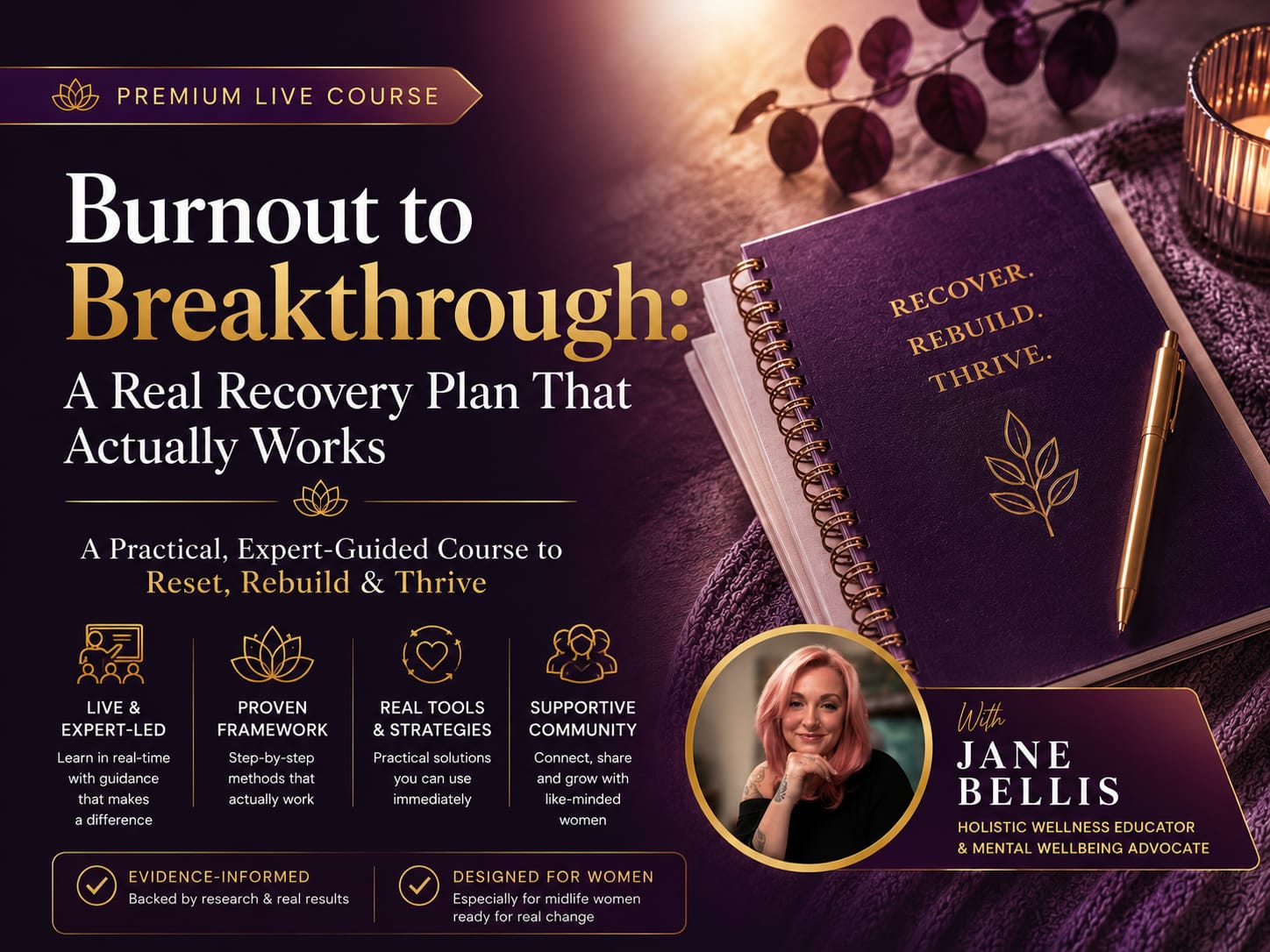
Burnout Recovery Course
A practical, self-paced recovery pathway created for women over 40.
Explore the course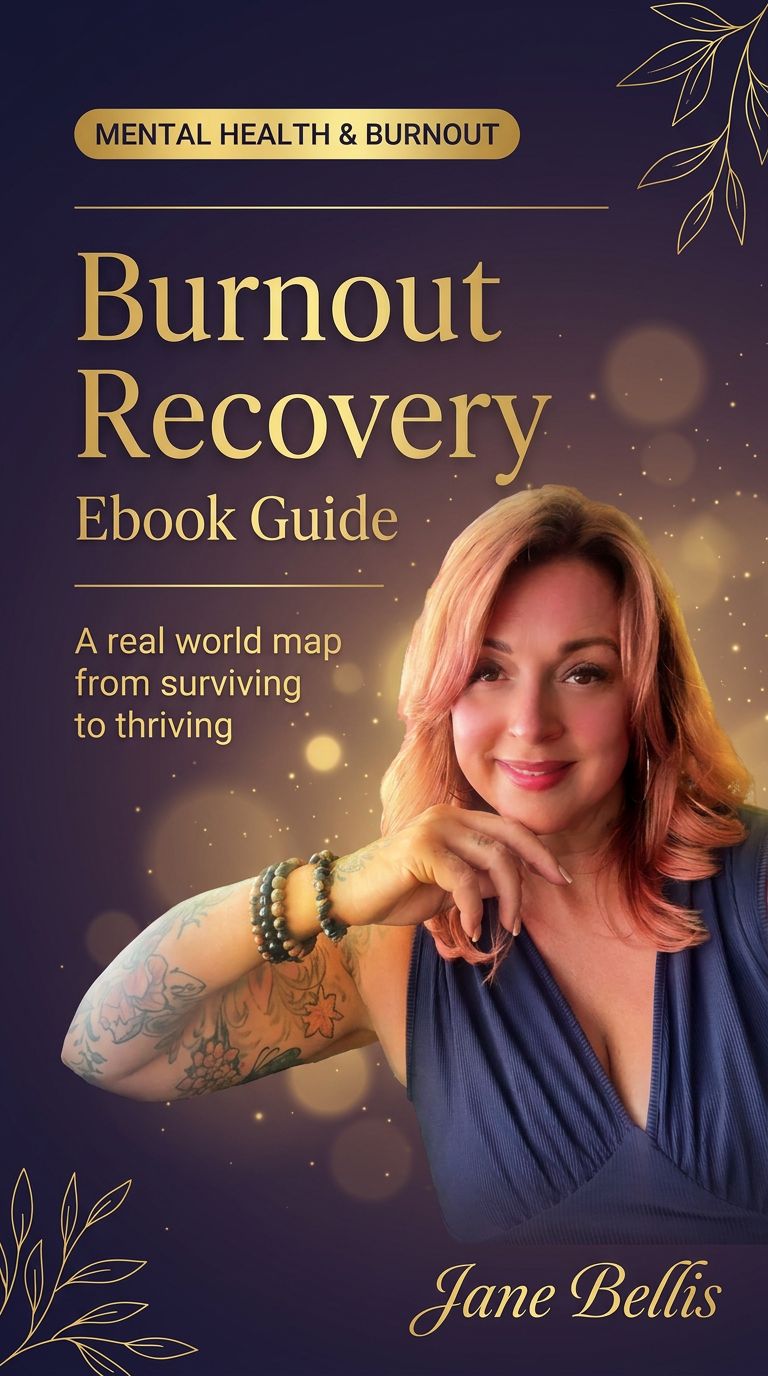
Burnout Recovery Guide
A real-world map with practical prompts and tools you can return to anytime.
Get the guideOne-to-One Coaching
Private guidance for women who need a personalised recovery plan and accountability.
Explore coaching